
Protecting your baby’s delicate skin from harmful UV rays is crucial, but not all sunscreens are created equal. In this guide to choosing baby sunscreen, you’ll learn which ingredients matter most, the features to prioritize, common mistakes to avoid, and my updated Top 5 safest picks—now verified through third-party testing and pediatrician endorsements.
Why Ingredients Matter When Choosing Baby Sunscreen
Babies’ skin is thinner and far more permeable than adult skin, so chemical filters like oxybenzone and octinoxate can irritate and even disrupt hormones. These chemicals also damage coral reefs. Instead, mineral sunscreens use physical blockers—zinc oxide and titanium dioxide—to reflect UV rays without absorption.
Key Features to Look For
When choosing baby sunscreen, scan labels for these must-have qualities:
- 100 % Zinc Oxide (Non-nano)
- Provides broad-spectrum coverage with minimal irritation risk.
- SPF 50+
- Shields effectively against UVA (aging) and UVB (burning) rays.
- Fragrance-Free & Hypoallergenic
- Reduces the risk of allergic reactions and respiratory irritation.
- Water-Resistant (At Least 80 Minutes)
- Ensures protection during splash-filled play.
- Reef-Safe Formula
- No oxybenzone or octinoxate—protects marine life.
Mineral Ingredients Explained
Zinc Oxide
A finely milled powder that sits atop the skin to physically block UV rays. Non-nano zinc oxide particles stay on the surface, never penetrating into pores.
Titanium Dioxide
Often paired with zinc oxide, it offers a lighter, silky application—perfect for babies who resist thick lotions.
Learn more about ingredient purity in our Organic vs Non-GMO comparison.
Common Mistakes When Choosing Baby Sunscreen
- Relying on Chemical Sunscreens: Oxybenzone/octinoxate can irritate sensitive skin and harm ecosystems.
- Skipping Reapplication: Even “water-resistant” formulas need a re-coat every 80 minutes.
- Using Adult Formulas: Adult sunscreens may contain fragrances, alcohols, or botanicals that trigger irritation.
How to Apply Sunscreen on Your Baby

- Prep the Skin: Ensure it’s clean and dry.
- Apply Generously: A nickel-sized dollop for face and neck, and one-third teaspoon for each limb.
- Rub Gently: Blend until the white cast is barely visible.
- Reapply: Every two hours—or immediately after swimming or heavy sweating.
H2: Choosing Baby Sunscreen – What Is EWG?
When choosing baby sunscreen, look for the EWG Verified® seal:
The Environmental Working Group (EWG) is a nonprofit research organization that rates personal-care products on ingredient safety, transparency, and environmental impact. Their EWG Verified® seal means a product meets strict standards for ingredient purity (no known or suspected toxins), full label disclosure, and responsible packaging.
Read more: Dive deeper in our full post on What Is the EWG? Why EWG Verified Sunscreens Matter.
Our Top 5 Safest Baby Sunscreen Picks
Each of these mineral-only formulas is non-nano, fragrance-free, reef-safe, and backed by EWG verification or third-party testing.
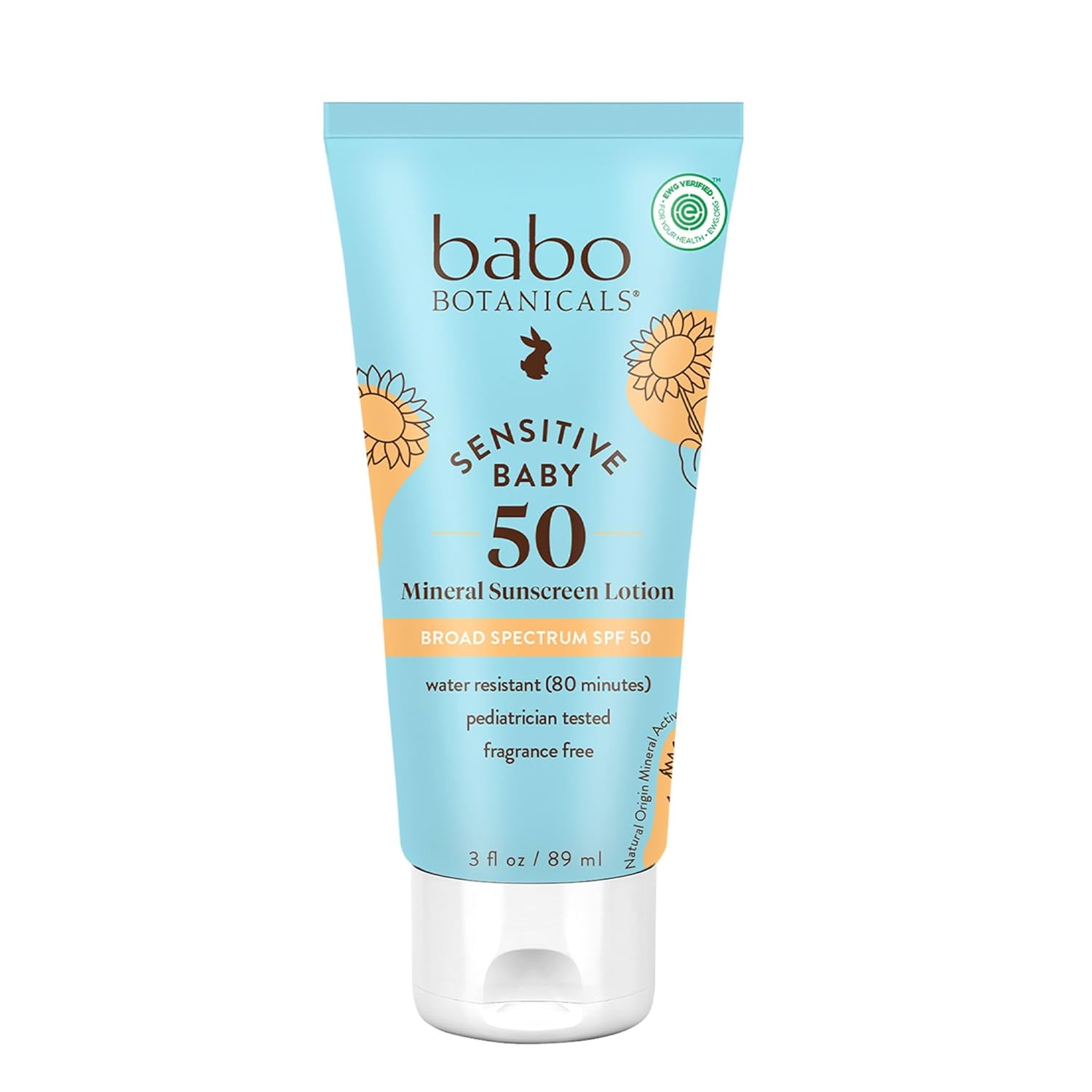
1. Babo Botanicals Sensitive Baby Mineral Sunscreen SPF 50
Active Ingredient: 20% Zinc Oxide (non-nano)
Certifications: EWG Verified, pesticide-free, reef-safe, vegan, cruelty-free
Water-Resistant: ✅ 80 minutes
EWG Rating: 1 (Best)
User Rating: 4.6 / 5 ★ (3,980+ reviews on Amazon)
Price: ~$19.00 (price may vary)

2. Thinkbaby Clear Zinc Sunscreen SPF 30
Active Ingredient: 20% Zinc Oxide (non-nano)
Certifications: EWG Verified, dermatologist-tested, reef-safe
Water-Resistant: ✅ 80 minutes
EWG Rating: 1 (Best)
User Rating: 4.6 / 5 ★ (180+ reviews on Amazon)
Price: ~$12.99 (price may vary)

3. Raw Elements Baby + Kids Mineral Sunscreen Stick SPF 30
Active Ingredient: 20% Zinc Oxide (non-nano)
Certifications: EWG Verified, USDA Organic, Fair for Life
Water-Resistant: ✅ 80 minutes
EWG Rating: 1 (Best)
User Rating: 4.7 / 5 ★ (2,300+ reviews on RawElementsUSA & Amazon)
Price: ~$15.95 (price may vary)

4. Badger Active Mineral Sunscreen Face Stick SPF 35
Active Ingredient: 22.5% Zinc Oxide (non-nano)
Certifications: NSF Certified, Leaping Bunny Certified, 97% Organic, Reef-Friendly
Water-Resistant: ✅ 80 minutes
EWG Rating: 1 (Best)
User Rating: 4.6 / 5 ★ (2,100+ reviews on Amazon)
Price: ~$10.99 (price may vary)

5. ATTITUDE Sunly Kids Mineral Sunscreen SPF 30
Active Ingredient: 20% Zinc Oxide (non-nano)
Certifications: EWG Verified, vegan, hypoallergenic, dermatologist-tested
Water-Resistant: ❌ Not officially water-resistant (brand recommends reapplying after water exposure)
EWG Rating: 1 (Best)
User Rating: 4.0 / 5 ★ (390+ reviews on Amazon)
Price: ~$15.88 (price may vary)
“As Amazon Associates, we earn a small commission from qualifying purchases at no extra cost to you.”
Why We Made the Change
We replaced Blue Lizard Baby SPF 50+ because Consumer Reports and EWG testing showed its real-world SPF far below label claims, especially after water exposure. Raw Elements Baby Mineral Sunscreen, SPF 30 steps in with EWG Verified® status, USDA Organic, Fair for Life, FDA-compliant broad-spectrum and water-resistance claims—making it a more reliably safe choice for your baby.
Conclusion & Next Steps in Choosing Baby Sunscreen
Choosing baby sunscreen is all about ingredient safety and proper application. Opt for mineral SPF 50+ formulas with zinc oxide (± titanium dioxide), fragrance-free, and reef-safe. Apply generously and re-coat every 80 minutes to keep your little one fully protected.
Ready to protect your little one?
Click any product below to shop my Top 5 safest baby sunscreens and give your baby the gentle, reef-friendly protection they deserve.


